Units of Time in English for Kids
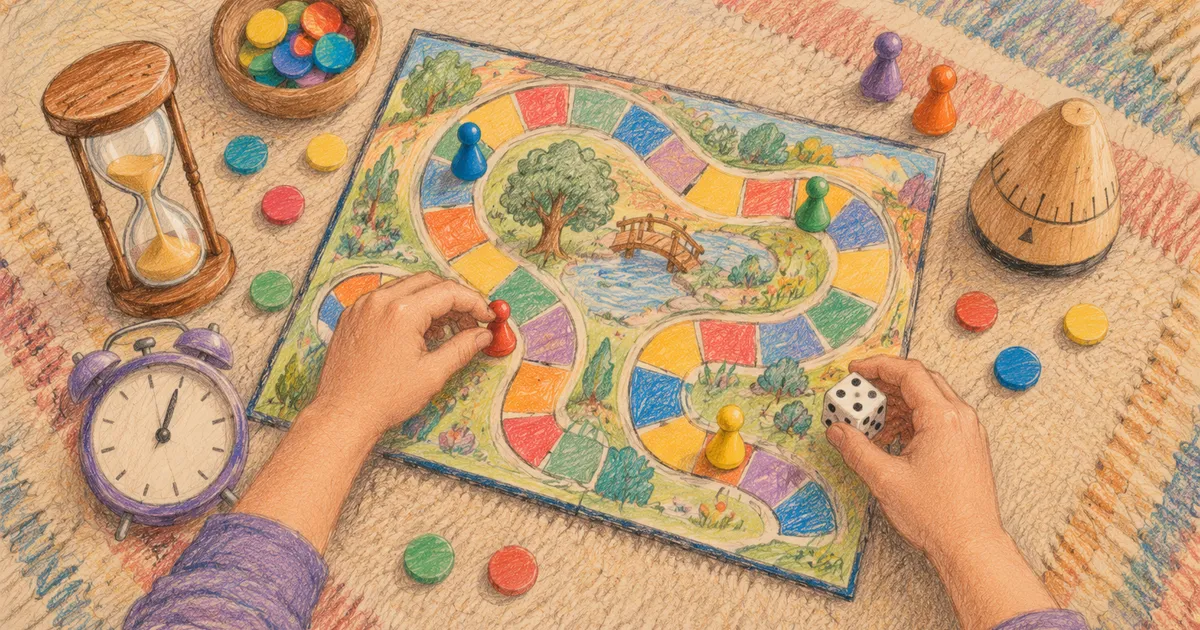
The core units of time are second, minute, hour, day, week, month, and year, with calendar words such as today, tomorrow, and yesterday. This guide to Units of Time in English for Kids: Words and Activities gives families a teaching order, examples, and games for different ages. Start with words from daily life: breakfast in the morning, a lesson at three o’clock, or a birthday next month. Children need not learn every term at once. A focused set, repeated through routines and play, supports telling the time, reading calendars, and describing past and future events.
Core Time Words and What They Mean
Begin with seven measuring words: second, minute, hour, day, week, month, and year. In Units of Time in English for Kids: Words and Activities, children should connect each word to a familiar duration instead of merely reciting the sequence. A clap lasts about a second, a short song may continue for a few moments, and sleep takes hours.
Add calendar and routine words next. Teach today, yesterday, tomorrow, morning, afternoon, evening, and night through family events. Calendars may show Monday or Sunday as the first day of the week, so explain the system used at your child’s school instead of presenting one layout as universal.
Time Phrases in Everyday Context
Examples turn Units of Time in English for Kids: Words and Activities into practical language. Ask questions about the day: “What time do you wake up?”, “How long is your lesson?”, and “What are we doing tomorrow?” Accept short answers such as “At seven,” “For 25 minutes,” or “We are visiting Grandma,” then model a complete sentence.
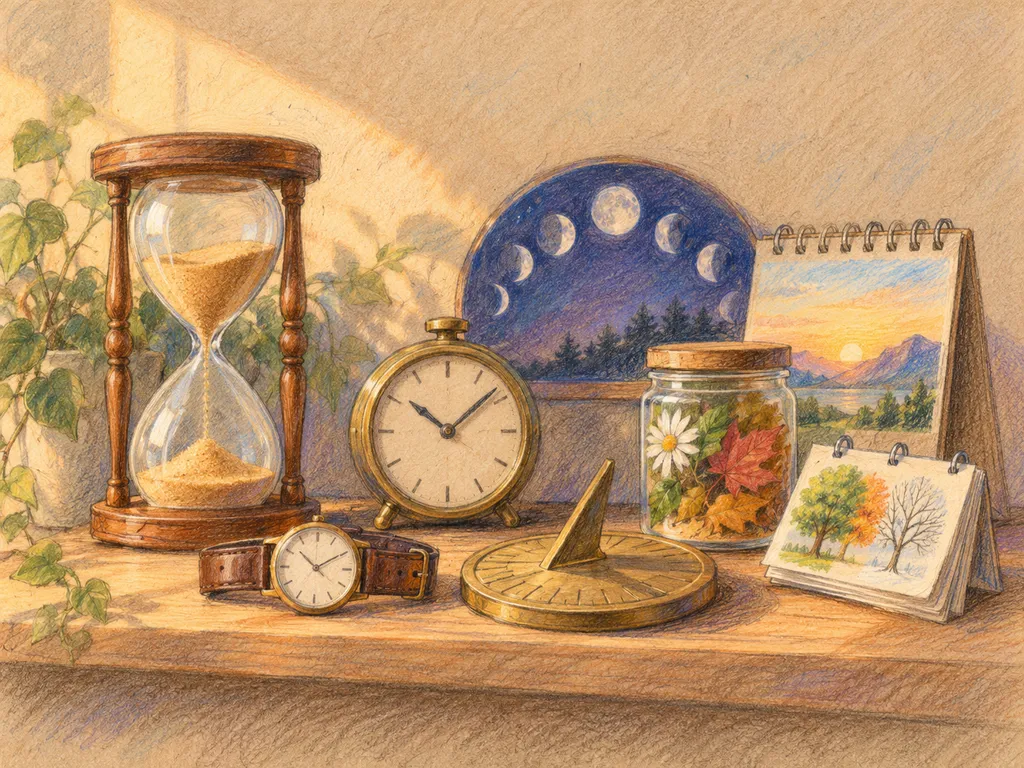
Separate clock time from duration. “The lesson starts at four” names a starting time; “The lesson lasts 50 minutes” names a duration. Use at with clock times, on with days and dates, and in with months, years, and broad parts of the day: at 6:30, on Tuesday, in August, and in the morning. The main exception is “at night.”
Older children can compare two ways to express the same clock time. For example, 7:15 can be “seven fifteen” or “a quarter past seven.” The time 7:30 can be “seven thirty” or “half past seven.” Teach one form until your child uses it confidently, then introduce the alternative. Avoid mixing forms in one answer.
Activities for Different Ages
School-age kids: use movement and pictures. Call out “second,” “minute,” or “hour,” then ask your child to choose a matching action or object. A blink represents a second; a sand timer shows one minute; a bedtime picture represents hours. Arrange three picture cards for morning, afternoon, and night.
School-age kids: make a day strip. Write five events on separate cards: wake up, eat breakfast, start school, play, and go to bed. Your child orders them and adds clock times where possible. Change one card and ask, “What happens before lunch?” or “What happens after school?” This connects time words with sequence.
School-age kids: practise planning and comparison. Ask your child to create a one-week timetable, estimate the duration of three activities, and compare each estimate with the actual time. Writing “I expected a third of an hour, but it took just over half an hour” practises numbers, past tense, and time units. Units of Time in English for Kids: Words and Activities then extends beyond vocabulary study.
A Simple Practice Plan at Home
Keep practice to a brief five-to-ten-minute session instead of setting a long test. On the first day, teach three unit words. On the second, review them and add today, yesterday, and tomorrow. Later, introduce clock times and calendar questions. Revisit words your child understands but cannot use in a sentence.
Connect the language to real routines. During breakfast, ask what happens in the afternoon. Before a lesson, ask how much time remains. At bedtime, recall a morning event and name a plan for tomorrow. A multilingual child may explain the concept in another language before attaching the English word to it.
Three-minute Time Challenge
Set a three-minute timer. Take turns naming a time word and using it in a sentence without repetition. For a lighter round, allow phrases such as “in the morning.” For a harder round, require a number, unit, and action: “I read for a third of an hour.”
Common Mistakes and Clear Fixes
Children may say “one hours” or “two minute.” Show the pattern side by side: one second, two seconds; one hour, three hours. Explain that an hour is correct because the first sound in hour is a vowel sound, although the word begins with the letter h.
Children also mix up in, on, and at. Display three models: “at five o’clock,” “on Saturday,” and “in September.” At first, let your child replace only the time information. When the pattern becomes steady, request complete sentences about family routines or school events.
Distinguish “What time?” from “How long?” The first question asks for a clock point: “At nine.” The second asks for duration: “For one hour.” A clock and timer make the contrast concrete. Ask one question with each object until your child selects the correct answer type independently.
- Try sorting six cards: second, minute, hour, day, week, month.
- Practice with children aged six to eight using a kitchen timer.
- Use one picture book to spot and correct confused time words together.
- Compare a thirty-second activity with a half-hour activity through two simple household examples.
- Repeat each corrected sentence three times, emphasizing the accurate unit of time.
When a word has several meanings or pronunciations, Cambridge Dictionary is a useful check before turning it into child-friendly examples.
Frequently Asked Questions
Which Time Words Should a Child Learn First?
Start with day, week, hour, and minute, plus today, yesterday, tomorrow, morning, and night. These words occur in family routines and can be demonstrated directly. Units of Time in English for Kids: Words and Activities works best when every new word connects to a real event. Add second, month, year, afternoon, and evening after the first set is secure.
How Can I Explain the Difference Between a Minute and an Hour?
Use two visible examples. Run a one-minute timer during a small task, then identify an activity lasting about an hour, such as a journey or sports session. Explain that 60 seconds make one minute and 60 minutes make one hour. Repeat the comparison on different days to build meaning through experience.
Should Children Learn Analogue or Digital Clocks First?
Start with the clock your child sees most often, while showing that both displays represent the same time. Digital clocks show exact numbers. Analogue clocks show half hours, quarter hours, and time’s movement. After one format becomes familiar, match examples such as 3:30 with half past three.
What If My Child Speaks More than One Language?
Connect the English terms to concepts your child already knows in other languages. Do not hide or replace those languages. Compare words, calendars, and ways of expressing clock times, then practise the English form in a full sentence. Shared routines teach a practical label instead of an isolated translation.
A short one-to-one lesson can show what level and pace fit your child — book a trial English lesson.
Stay updated on our latest tips and resources by following us on Instagram LearnLink.